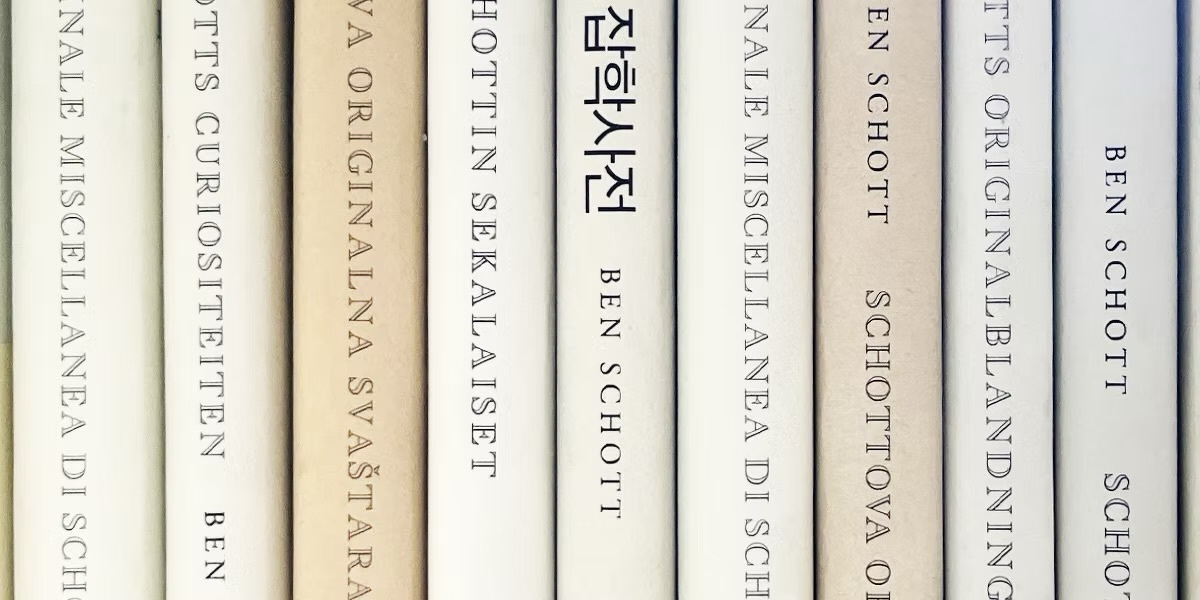
Some of my favourite “dipping” books are the miscellanies and almanacs by Ben Schott. But I’d never been fully sure what the difference between the two was. But I’ve learnt:
A miscellany is a collection of varied information with no organising principle beyond interest and surprise — from Latin miscellanea (“a mixture”). The format has roots in Roman and early modern English literature; Ben Schott’s Miscellany (2002) revived it as a modern trivia cabinet. Dip in anywhere; there’s no order to follow.
An almanac is fundamentally calendar-structured, tracing its name to Arabic al-manākh (“the calendar”). Historically contained astronomical data, weather predictions, feast days, and seasonal guidance. Old Moore’s Almanack (1697) and Benjamin Franklin’s Poor Richard’s Almanack are classic examples — practical tools as much as reading matter. Ben Schott’s almanacs follow this time-anchored tradition, organised by month and season.
Key distinction: miscellanies are timeless and structureless; almanacs march through the year.