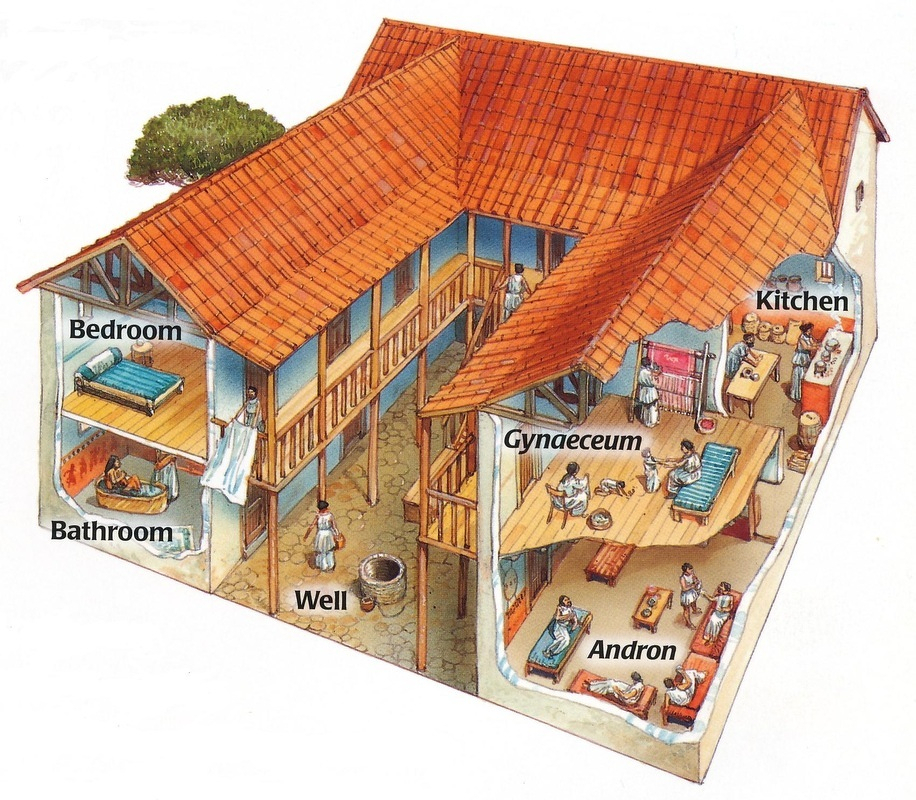
A gynaeceum (or gynæceum) refers historically to the women’s quarters or inner, secluded apartments in an ancient Greek or Roman house. As the counterpart to the male andrōn, this area was typically located in the innermost part of the home for women’s activities like weaving.
The men’s room – the andron – was positioned near the front, accessible to male visitors. The gynaeceum was typically at the rear or on an upper floor, accessible to family only. It was where women spun, wove, raised children, and ran the household economy. And I’m sure it was a lot more bare bones than the men’s room!
Apparently having the wealth to hide your wife away in a gynaeceum was an elite ideal. As the wives of poorer households would go to markets, wells, and shrines.
I remember reading once that Ancient Greece was more like a strict Muslim city than a city of democracy, knowledge and philosophy. Women being “locked away” in a gynaeceum certainly attests to that argument.
#NewWord learnt via Papyrus: The Invention of Books in the Ancient World by Irene Vallejo 📚